Federal Bureau of Investigation
The RainmakerThe Federal Bureau of Investigation is presented as a force investigating Memphis’s criminal underworld and closing in on the orbit of Bruiser Stone and Prince Thomas. Its presence is felt less through direct scenes with agents than through testimony, guarded conversations, and the persistent fear of surveillance—a pressure that complicates Rudy Baylor’s work at Bruiser’s law office.
Investigation of the Memphis underworld
The investigation is already consequential when Rudy joins Bruiser’s office. Deck Shifflet says that Bruiser has been acting unusually: drinking more, becoming angry more quickly, and stomping around the office. Deck connects the change to the FBI’s current investigation of the Memphis underworld, which has repeatedly brought up the names of Bruiser and his close friend Prince Thomas. The agency’s inquiry is described as active, but its evidence and exact reach remain unknown to the people around Bruiser.
The investigation’s uncertainty is part of its power. Deck cannot say how deeply Bruiser is implicated or what the FBI knows; he can only report that the agency is trying to determine the extent of Bruiser’s connections. That lack of clear information leaves Rudy working inside an office whose ordinary legal business is overshadowed by a danger he cannot measure.
Surveillance fears and guarded speech
The possibility of intercepted communications shapes the characters’ behavior before the novel establishes that any particular phone has actually been tapped. Prince Thomas speaks to Bruiser in clipped, cautious phrases when calling about Rudy’s legal trouble, and Rudy imagines an FBI technician trying to extract incriminating information from the conversation. The scene presents surveillance as a constraint on speech, not as confirmed evidence of what the agency has recorded.
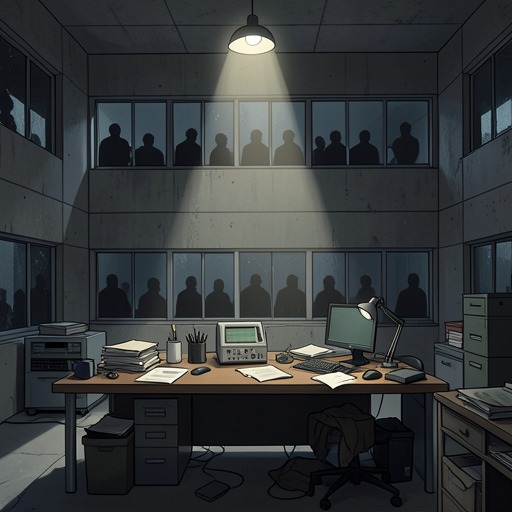
Deck later insists that the FBI has bugged every phone in the office, including Rudy’s, and suspects that the walls are wired as well. He claims that this has happened before and warns Rudy to be careful at Yogi’s. These statements are Deck’s assessment, not an independently verified account of FBI surveillance. Their effect is nevertheless concrete: the office and a familiar meeting place become spaces where casual conversation may carry risk, and Rudy is advised to leave once he passes the bar and has some money.
David Roy and the grand jury
A possible source of information emerges when Deck tells Rudy that David Roy, a former associate of Bruiser, testified before a grand jury. Roy had been disbarred for commingling funds and later entered the nightclub business. Deck describes a history of club fires and violence, Bruiser’s falling-out with Roy, and Roy’s recent arrest by federal authorities. He believes Roy may have made a deal and could be cooperating with the government.
Deck also warns that Prince Thomas may be implicated by Roy’s testimony, but his account remains explicitly uncertain: the possibility that Roy is informing on Bruiser or Prince is presented as a strong suspicion, not a confirmed disclosure of what Roy said. Deck mentions a rumor that there may be a price on Prince’s head, without establishing who is responsible. The grand-jury testimony therefore sharpens the threat around Bruiser’s circle while leaving the investigation’s findings unresolved.
Narrative role
The FBI functions as an unseen institutional pressure on Rudy’s new workplace. Its investigation gives urgency to Deck’s warnings and casts Bruiser’s phones, office, and associates in a different light, even as the evidence available to Rudy is fragmentary and often secondhand. The contrast between the office’s routine legal paperwork and the possibility of federal scrutiny makes the law firm feel exposed: Rudy has entered a professional world where the next consequential document may be a motion from a corporate opponent, while the larger danger may come from information being gathered beyond his view.